Beginner’s Guide to a Balanced Diet
The good news? You don’t need complicated meal plans. With simple, consistent daily healthy habits, you can create a sustainable and healthy way of eating.
📑 Table of Contents
- What Is a Balanced Diet?
- Why Healthy Eating Matters
- Food Groups in a Balanced Diet
- How to Build a Balanced Meal
- Simple Health Tips for Beginners
- Sample Healthy Routine Daily
- FAQs
- Conclusion
What Is a Balanced Diet?

A balanced diet provides your body with the right mix of nutrients needed to function properly.
Key components:
- Carbohydrates
- Protein
- Healthy fats
- Vitamins and minerals
- Water
These nutrients support energy, growth, and overall health.
Why Healthy Eating Matters
Developing healthy living tips early can reduce your risk of chronic diseases.
Benefits:
- Better energy levels
- Improved digestion
- Stronger immune system
- Healthy weight management
Research from the National Institutes of Health confirms that balanced nutrition plays a key role in long-term health.
Food Groups in a Balanced Diet
To follow how to live a healthy lifestyle, include all major food groups.
| Food Group | Examples | Benefits |
|---|---|---|
| Fruits | Apples, berries | Rich in vitamins |
| Vegetables | Spinach, carrots | High in fiber |
| Grains | Brown rice, oats | Energy source |
| Protein | Chicken, beans | Muscle growth |
| Healthy Fats | Nuts, olive oil | Heart health |
How to Build a Balanced Meal
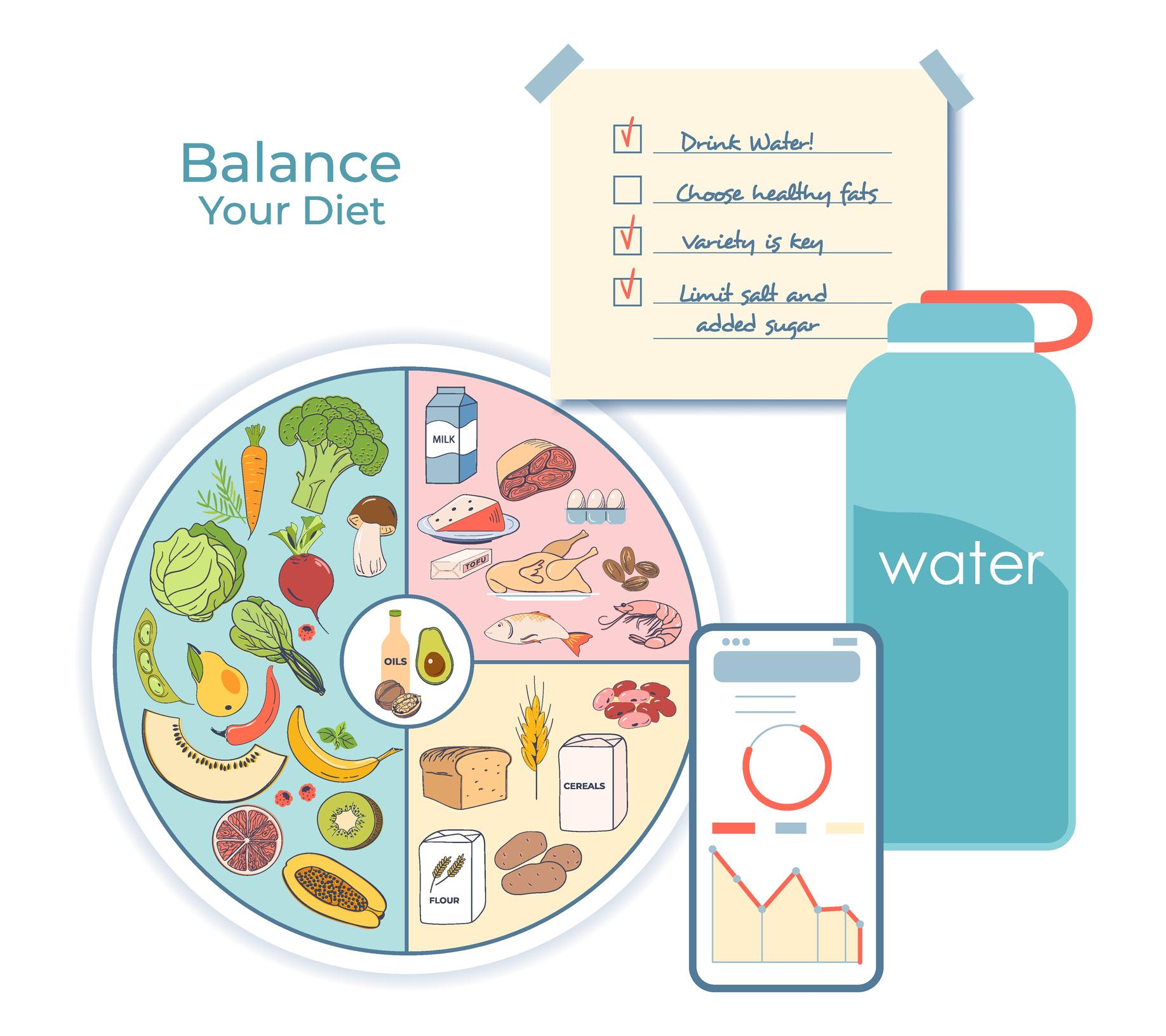
A simple way to eat healthy is by using the plate method.
Balanced Plate Rule:
| Portion | Food |
|---|---|
| 50% | Vegetables & fruits |
| 25% | Whole grains |
| 25% | Protein |
| Small portion | Healthy fats |
This method supports a healthy routine daily without calorie counting.
Beginner’s Guide to a Balanced Diet: Simple Health Tips
Here are practical simple health tips to get started.
1. Eat More Whole Foods
Whole foods are less processed and more nutritious.
Examples:
- Fresh fruits
- Vegetables
- Whole grains
2. Control Portion Sizes
Even healthy foods should be eaten in moderation.
👉 Use smaller plates to manage portions.
3. Stay Hydrated
Water supports digestion and metabolism.
👉 Drink at least 8 glasses daily.
4. Limit Added Sugar
Too much sugar can increase health risks.
👉 Choose natural alternatives like fruits.
5. Plan Your Meals
Meal planning helps maintain daily healthy habits.
- Prepare meals in advance
- Avoid unhealthy snacking
6. Include Protein in Every Meal
Protein keeps you full longer and supports muscle health.
7. Don’t Skip Meals
Skipping meals can lead to overeating later.
8. Add More Fiber
Fiber improves digestion and keeps you full.
9. Cook More at Home
Home cooking gives you control over ingredients.
10. Be Consistent
Consistency is key when building wellness tips for daily life.
🧾 Sample Balanced Diet Plan
| Meal | Example |
|---|---|
| Breakfast | Oatmeal with fruits |
| Lunch | Grilled chicken salad |
| Snack | Yogurt and nuts |
| Dinner | Fish with vegetables |
Benefits of a Balanced Diet
| Benefit | Impact |
|---|---|
| Better energy | Improved productivity |
| Weight control | Healthy body |
| Heart health | Lower risk of disease |
| Mental clarity | Better focus |
Frequently Asked Questions (FAQ)
What is a balanced diet?
A diet that includes all essential nutrients in proper proportions.
How can beginners start healthy eating?
Start by adding more fruits, vegetables, and whole foods.
How many meals should I eat daily?
3 main meals and 1–2 healthy snacks.
Can a balanced diet help weight loss?
Yes. It promotes healthy and sustainable weight management.
Do I need supplements?
Most nutrients can be obtained from food, but consult a doctor if needed.
External References
Conclusion
A balanced diet is the foundation of a healthy life. By following this beginner’s guide to a balanced diet, you can build sustainable eating habits that improve your health and energy levels.
Start small. Stay consistent. Over time, these healthy lifestyle habits will become part of your daily routine.
👉 Take control of your nutrition today and build a healthier future.