
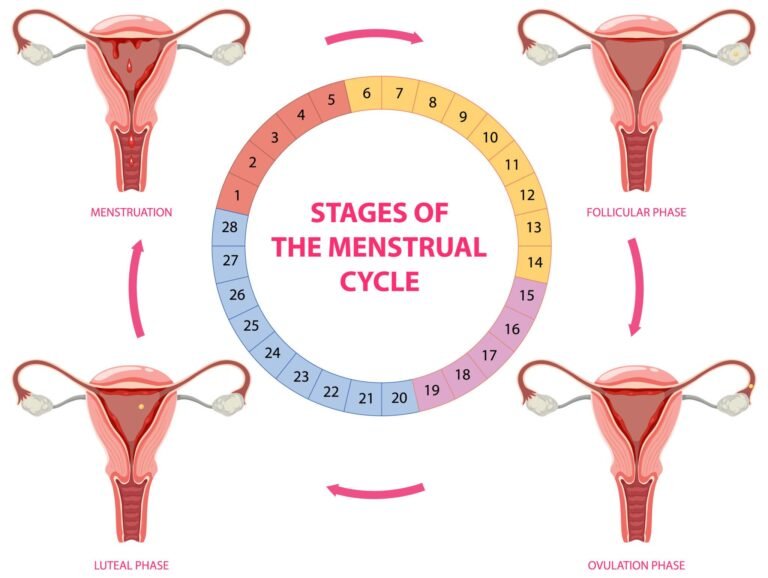
Menstrual cycle phases explained simply means understanding how hormonal changes affect a woman’s body throughout the month. The menstrual cycle is a natural biological process that prepares the body for pregnancy and plays a major role in reproductive health.
According to the Office on Women’s Health, the average menstrual cycle lasts about 28 days, although cycles between 21 and 35 days are considered normal for many women.
Understanding the 4 stages of the menstrual cycle can help women track fertility, manage symptoms, and better understand their overall health.
In this guide, we’ll explain the phases of menstrual cycle, common symptoms, hormonal changes, and helpful wellness tips for maintaining reproductive health.
📑 Table of Contents
- What Is the Menstrual Cycle?
- Why Understanding Menstrual Cycle Phases Matters
- 4 Stages of the Menstrual Cycle
- Hormones Involved in the Menstrual Cycle
- Common Symptoms During Each Phase
- Tips for a Healthy Menstrual Cycle
- FAQs
- Conclusion
What Is the Menstrual Cycle?
The menstrual cycle is a monthly hormonal process that prepares the female body for pregnancy.
If pregnancy does not occur, the uterus sheds its lining through menstruation, also known as a period.
The cycle involves several hormonal changes controlled by:
- Estrogen
- Progesterone
- Follicle-stimulating hormone (FSH)
- Luteinizing hormone (LH)
Why Understanding Menstrual Cycle Phases Matters
Learning about the phases of menstrual cycle helps women:
- Track ovulation and fertility
- Identify irregular periods
- Understand mood and energy changes
- Manage PMS symptoms
- Improve reproductive health awareness
It can also help healthcare providers detect underlying conditions such as PCOS or hormonal imbalances.
The 4 Stages of the Menstrual Cycle
The menstrual cycle has four main phases.
| Phase | Typical Days | Main Hormones |
| Menstrual Phase | Day 1–5 | Low estrogen & progesterone |
| Follicular Phase | Day 1–13 | Rising estrogen |
| Ovulation Phase | Day 14 | Luteinizing hormone surge |
| Luteal Phase | Day 15–28 | Increased progesterone |
1. Menstrual Phase Explained
The menstrual phase is the beginning of the cycle.
During this stage, the uterus sheds its lining if pregnancy has not occurred.
Common symptoms:
- Bleeding
- Cramps
- Fatigue
- Mood changes
Most periods last between 3–7 days.
Wellness tips:
- Stay hydrated
- Eat iron-rich foods
- Use heat therapy for cramps
2. Follicular Phase of the Menstrual Cycle
The follicular phase overlaps with menstruation and continues until ovulation.
During this phase:
- The brain releases FSH
- Ovarian follicles begin maturing
- Estrogen levels rise
Common changes:
- Increased energy
- Improved mood
- Better focus
This is often considered the most energetic phase of the cycle.
3. Ovulation Phase Explained
Ovulation is when the ovary releases a mature egg.
This phase usually occurs around day 14 in a 28-day cycle.
Signs of ovulation:
- Clear cervical mucus
- Mild pelvic pain
- Increased libido
- Slight rise in body temperature
According to the American College of Obstetricians and Gynecologists, ovulation is the most fertile time in the cycle.
4. Luteal Phase of the Menstrual Cycle
The luteal phase occurs after ovulation.
During this stage:
- Progesterone levels rise
- The uterus prepares for pregnancy
If pregnancy does not occur, hormone levels drop and menstruation begins again.
Common PMS symptoms:
- Bloating
- Mood swings
- Breast tenderness
- Food cravings
Hormones Involved in the Menstrual Cycle
Hormones control each stage of the menstrual cycle.
| Hormone | Function |
| Estrogen | Builds uterine lining |
| Progesterone | Supports pregnancy preparation |
| FSH | Stimulates egg development |
| LH | Triggers ovulation |
Hormonal balance is essential for regular menstrual cycles.
Common Menstrual Cycle Symptoms
Women may experience different symptoms during each phase.
Physical symptoms:
- Cramps
- Fatigue
- Headaches
- Bloating
Emotional symptoms:
- Mood swings
- Irritability
- Anxiety
Tracking symptoms can help identify patterns and irregularities.
Tips for a Healthy Menstrual Cycle
Healthy lifestyle habits can support reproductive health.
1. Eat a Balanced Diet
Nutrition supports hormone balance.
Include:
- Fruits and vegetables
- Whole grains
- Healthy fats
- Lean protein
2. Exercise Regularly
Physical activity improves circulation and reduces stress.
Moderate exercise may also reduce menstrual cramps.
3. Manage Stress
Stress can affect hormone levels and menstrual regularity.
Helpful methods:
- Meditation
- Yoga
- Deep breathing
4. Get Enough Sleep
Poor sleep may worsen PMS symptoms and hormonal imbalance.
Aim for 7–9 hours of sleep nightly.
5. Track Your Cycle
Apps or calendars can help monitor:
- Period dates
- Ovulation
- Symptoms
Tracking can improve reproductive health awareness.
Menstrual Cycle Phases and Fertility
Understanding the 4 stages of the menstrual cycle is important for fertility tracking.
Fertile window:
- Usually 5–6 days around ovulation
This knowledge can help women trying to conceive or avoid pregnancy naturally.
When to See a Doctor
Consult a healthcare provider if you experience:
- Extremely painful periods
- Irregular cycles
- Heavy bleeding
- Missed periods
- Severe PMS symptoms
These may indicate hormonal or reproductive health conditions.
Frequently Asked Questions (FAQ)
What are the 4 stages of the menstrual cycle?
The menstrual phase, follicular phase, ovulation phase, and luteal phase.
How long does the menstrual cycle last?
The average cycle lasts about 28 days, but 21–35 days can be normal.
What happens during ovulation?
A mature egg is released from the ovary for possible fertilization.
Can stress affect the menstrual cycle?
Yes. High stress levels can disrupt hormones and cause irregular periods.
Why is tracking the menstrual cycle important?
Tracking helps monitor fertility, symptoms, and overall reproductive health.
Focus Keywords
product life cycle, menopause, cardiac cycle, ivf process, 4 stages of the menstrual cycle, phases of menstrual cycle
Internal Linking Suggestions
- How to Reduce Stress Naturally
- Beginner’s Guide to a Balanced Diet
- 10 Daily Habits for a Healthy Lifestyle
External References
Conclusion
Understanding the menstrual cycle phases explained in this guide can help women better manage their health, fertility, and well-being. Each phase of the cycle involves important hormonal changes that affect the body and emotions.
By learning about the phases of menstrual cycle, tracking symptoms, and maintaining healthy habits, women can take a more informed approach to reproductive health.
👉 Knowledge about your body is one of the most powerful tools for better health and wellness.
Medical Disclaimer
This article is for informational purposes only and does not replace professional medical advice. Consult a qualified healthcare provider for personalized medical guidance.